Lower back pain is very common, but when the pain starts traveling into the buttock, leg or foot, a spinal disc may be pressing on a nerve.
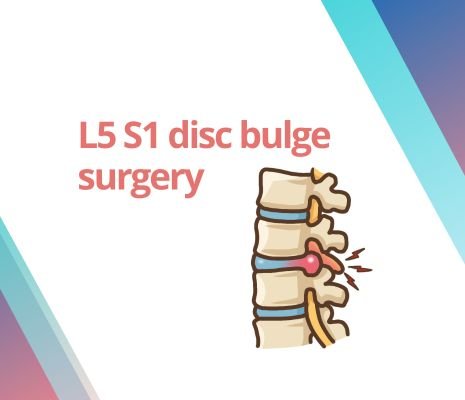
One of the most commonly affected areas is the L5-S1 disc, located at the lowest part of the lower back.
If your MRI mentions an L5-S1 disc bulge, it does not automatically mean you need surgery. Many patients improve with medicines, physiotherapy and lifestyle changes. Surgery is usually considered only when symptoms are severe, weakness is developing or nerve compression is not improving.
Patients looking for L5-S1 disc bulge surgery in Pune can consult Dr. Vishal Bhasme, Spine Surgeon in Pune for evaluation and treatment.
What Is an L5-S1 Disc Bulge?
The spine is made up of bones called vertebrae. Between these bones are soft discs that act like cushions and help the spine move smoothly.
L5 is the last bone of the lumbar spine, while S1 is the first bone of the sacrum. The disc between them is known as the L5-S1 disc.
Because this part of the spine carries a lot of body weight and is involved in sitting, bending and lifting, it can wear down over time.
When the disc pushes outward, it is called a disc bulge or disc herniation.
A small disc bulge may cause no symptoms. Problems usually start when the disc presses on a nearby nerve.
You can also read: How to Heal a Bulging Disc Naturally.
Symptoms of an L5-S1 Disc Bulge
Common symptoms include:
- Lower back pain
- Pain travelling into the buttock or leg
- Sciatica
- Tingling or numbness in the foot
- Burning pain in the leg
- Weakness in the foot or calf
- Difficulty walking or standing for long periods
- Pain while sitting, bending or lifting
Some patients have very little back pain but severe leg pain because the nerve, rather than the back itself, is being irritated.
For more information, read about Sciatica Pain Treatment in Pune.
Does Every L5-S1 Disc Bulge Need Surgery?
No.
An MRI report alone should not decide whether surgery is needed.
The spine surgeon will consider:
- Severity of pain
- Duration of symptoms
- Presence of numbness
- Muscle weakness
- Difficulty walking
- Amount of nerve compression
- Response to medicines and physiotherapy
Many patients can initially be treated with medicines, physiotherapy, posture correction, regular walking and avoiding heavy lifting.
When Is Surgery Required?
Surgery may be considered when the nerve remains compressed and symptoms are affecting daily life.
Severe leg pain is not improving
If sciatica continues even after proper medicines and physiotherapy, surgery may be discussed.
Weakness is increasing
Weakness in the leg, ankle or foot can mean the nerve is being affected more seriously.
Walking becomes difficult
Some patients may find it difficult to walk normally, stand on their toes or perform everyday activities.
MRI shows significant nerve compression
If the MRI shows a large disc herniation pressing on the nerve and the symptoms match the scan, surgery may help.
Pain is affecting normal life
Surgery may be considered when pain prevents a person from sleeping, sitting, driving, walking or working comfortably.
When Is It an Emergency?
Seek immediate medical attention if you develop:
- Difficulty passing urine
- Loss of bladder or bowel control
- Numbness around the inner thighs or private area
- Sudden weakness in both legs
- Severe difficulty walking
These symptoms may indicate serious nerve compression known as cauda equina syndrome and should not be ignored.
What Surgery Is Done for L5-S1 Disc Bulge?
The type of surgery depends on the size and position of the disc and the amount of nerve pressure.
Microdiscectomy
During a microdiscectomy, the surgeon removes the small part of the disc pressing on the nerve.
The whole disc is usually not removed.
Endoscopic Spine Surgery
Some patients may be suitable for endoscopic spine surgery.
A small camera and specialised instruments are passed through a small opening. The surgeon removes the disc material pressing on the nerve.
Read more about Endoscopic Spine Surgery in Pune.
Possible benefits in suitable patients may include:
- Smaller incision
- Less muscle damage
- Less blood loss
- Early walking
- Shorter hospital stay
- Faster recovery
However, endoscopic surgery is not suitable for every patient.
Is Spinal Fusion Always Needed?
No.
A simple L5-S1 disc bulge usually does not automatically require fusion.
Fusion may be needed when there is spinal instability, severe degeneration, slipping of the vertebra or certain recurrent problems.
Read more about Spinal Fusion Surgery.
How Long Is Recovery?
Recovery depends on the type of surgery and the patient’s condition.
Many patients undergoing minimally invasive disc surgery can start walking soon after surgery and return to light daily activities gradually.
Pain may improve quickly after the nerve is released, but numbness or weakness can sometimes take longer because nerves need time to heal.
Recovery also depends on:
- Age
- Duration of nerve compression
- Severity of weakness
- Overall health
- Type of job
- Physiotherapy
Can the Disc Bulge Come Back?
Yes, there is a small possibility of another disc herniation after surgery.
Surgery removes the portion pressing on the nerve but does not completely stop natural wear and tear of the spine.
Maintaining a healthy weight, strengthening the back muscles, improving posture and avoiding incorrect heavy lifting can help protect the spine.
L5-S1 Disc Bulge Surgery in Pune
If your MRI shows an L5-S1 disc bulge, the most important question is not simply, “Which surgery do I need?”
The better question is:
“Do I actually need surgery?”
Many patients can recover without an operation. Surgery is mainly considered when pain remains severe, weakness develops or nerve function is at risk.
Dr. Vishal Bhasme treats slipped discs, sciatica, nerve compression and other spine conditions using non-surgical, minimally invasive and surgical treatment depending on the patient’s condition.
Patients can consult him at Ruby Hall Clinic and Lopmudra Hospitals in Pune.
A neurological examination and MRI review can help decide whether medicines and physiotherapy should be continued or whether surgery would be a better option.
Dr. Vishal Bhasme
MBBS, MS, MCh – Neurosurgery
Consultant Neurosurgeon & Spine Surgeon, Pune
Medical disclaimer: This article is for general awareness and should not replace personalised medical advice from a qualified doctor.