Are you experiencing lower back pain while sitting, walking, bending, or getting out of bed? Has your MRI report shown a bulging disc at L4-L5 or L5-S1?
If yes, you might be wondering, “Can a bulging disc heal naturally without surgery?”
The good news is that many people with a bulging disc recover without surgery. In fact, most patients with uncomplicated disc problems can start with non-surgical treatment.
However, recovery does not mean complete bed rest, taking painkillers every day, or trying random exercises from YouTube.
As a neurosurgeon, I often explain to my patients that the right movement, regular walking, simple lifestyle changes, and proper physiotherapy can make a big difference.
Let’s understand what a bulging disc is, how you can manage it naturally, and when you should see a spine specialist.
What Is a Bulging Disc?
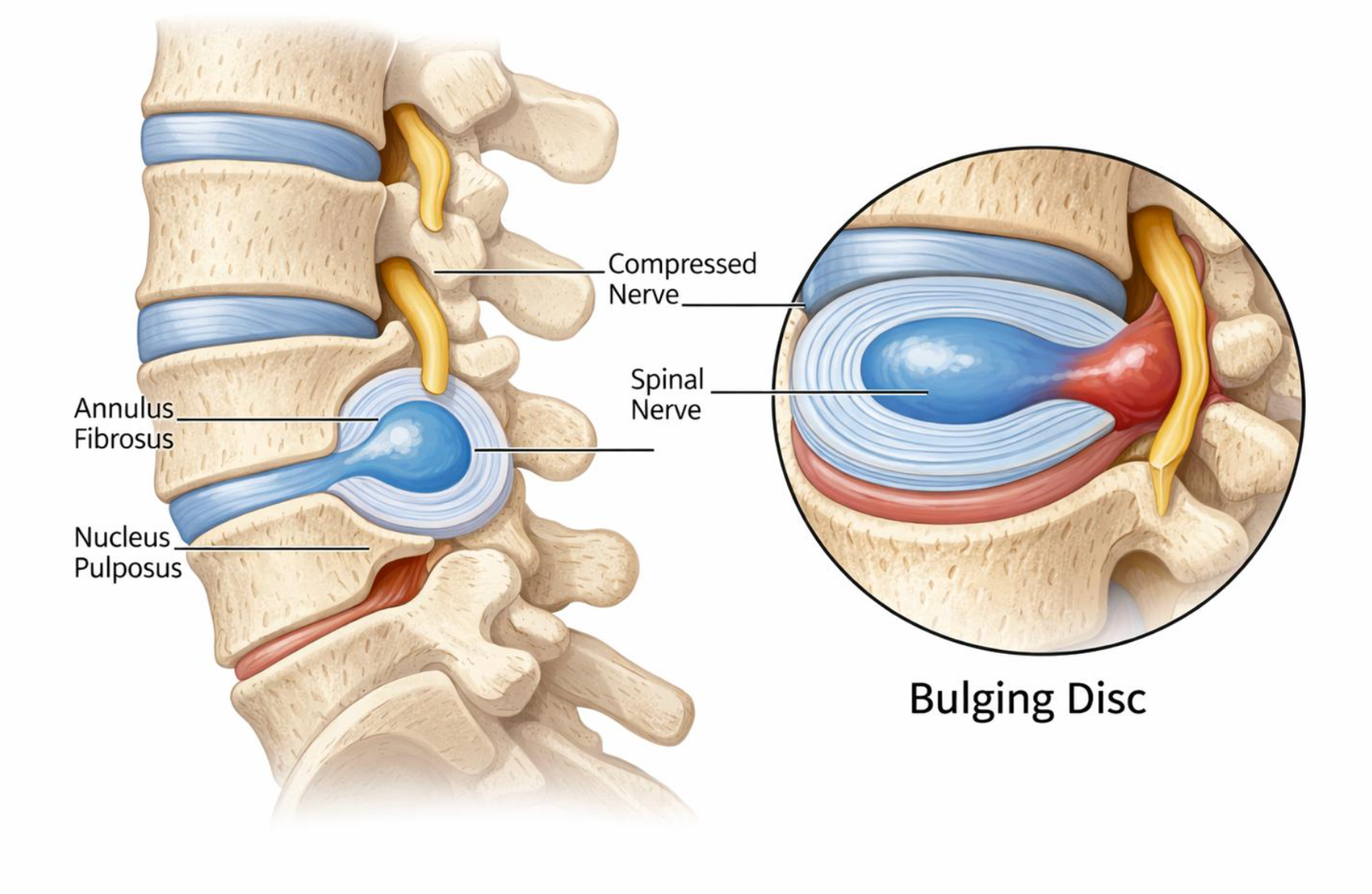
Our spine is made up of small bones called vertebrae. Between these bones are soft cushions called discs.
These discs help absorb pressure and allow us to bend, sit, walk, and move comfortably.
A bulging disc happens when one of these cushions pushes outward beyond its normal position.
Sometimes, this bulge puts pressure on a nearby nerve, causing pain, tingling, or numbness.
Common Symptoms of a Bulging Disc
- Lower back pain, especially while sitting or bending
- Pain spreading from the back to the buttock or leg
- Tingling or numbness in the legs or feet
- Difficulty sitting for long periods
- Pain while getting up from a chair
- Sometimes, weakness in the leg or foot
Important: Not every bulging disc causes pain. Many people have a disc bulge on their MRI but experience no symptoms at all.
That is why treatment should depend on your symptoms and physical examination, not just your MRI report.
Can a Bulging Disc Heal Naturally?
Yes, many people recover from a bulging disc without surgery.
When a disc irritates a nearby nerve, it can cause inflammation and pain. Over time, this inflammation may settle, and the nerve can become less irritated.
In some cases, disc material can also gradually shrink. However, this happens more commonly with certain types of herniated discs than with simple disc bulges.
Even if your MRI continues to show a disc bulge, your pain may improve significantly.
The goal is not always to make the MRI completely normal. The goal is to reduce pain, improve movement, and help you return to your normal life.
Here are seven practical steps that may help.
7 Practical Ways to Heal a Bulging Disc Naturally
1. Walk Every Day, Even If It Is Just for 5–10 Minutes
One of the most common mistakes patients make after being diagnosed with a bulging disc is stopping all physical activity.
They believe that lying in bed will help the disc recover faster.
But too much bed rest can make your back muscles weaker and increase stiffness.
What should you do instead?
- Start with a comfortable 5–10-minute walk.
- Walk two or three times a day if possible.
- Choose a flat surface.
- Avoid walking very fast during the painful phase.
- Gradually increase your walking time as you feel better.
You do not need to walk 5 kilometres on the first day.
If you can comfortably walk for five minutes, start there.
Walking helps keep your muscles active and prevents stiffness. However, if walking increases pain travelling down your leg, causes numbness, or worsens weakness, seek medical advice.
2. Avoid Sitting Continuously for Long Hours
Many patients with a lumbar disc bulge complain that their back pain increases after sitting for a long time.
This is especially common among people working in IT, offices, or jobs that involve long hours at a desk.
Simple changes you can make:
- Avoid sitting continuously for several hours.
- Stand up or change your position every 30–45 minutes.
- Keep both feet comfortably on the floor.
- Use a chair that supports your lower back.
- Avoid bending forward over your laptop.
- Take a short walk during work breaks.
You don’t need to maintain one perfect posture throughout the day.
The most important thing is to keep changing your position and avoid sitting in one position for too long.
3. Start Gentle Exercises Under a Physiotherapist’s Guidance
Exercise can help improve back strength, flexibility, and movement.
However, not every exercise is suitable for every patient.
Some exercises may help one person but worsen another person’s pain, particularly if a nerve is being compressed.
A physiotherapist may recommend exercises such as:
- Gentle pelvic movements
- Core muscle activation
- Modified bird-dog exercises
- Glute bridges
- Simple back-strengthening exercises
The right exercises depend on your symptoms.
Avoid forcing stretches or exercises that increase your back pain or cause pain to travel further down your leg.
If you have a disc bulge with sciatica, consult a qualified physiotherapist or spine specialist in Pune before starting a new exercise routine.
4. Avoid Heavy Lifting and Repeated Bending
Imagine you already have lower back pain, but you continue lifting heavy bags, bending repeatedly, or doing heavy gym workouts.
These activities can make symptoms worse.
During recovery, try to avoid:
- Heavy weightlifting that triggers pain
- Repeated forward bending
- Sudden twisting movements
- Lifting heavy objects directly from the floor
- Exercising through sharp back or leg pain
If you need to lift something, keep it close to your body and bend through your hips and knees rather than bending only from your lower back.
This does not mean you can never lift weights again.
Once your pain improves, you can gradually return to normal activities and exercise with proper guidance.
5. Maintain a Healthy Weight
Excess body weight can put additional strain on your lower back, especially during daily activities.
Maintaining a healthy weight may help reduce this strain and improve your overall mobility.
You can start with simple changes:
- Eat balanced meals with enough protein.
- Include vegetables, fruits, and whole grains.
- Reduce frequent consumption of fried and highly processed foods.
- Stay physically active within your comfort level.
- Follow a sustainable weight-management plan if you are overweight.
There is no special food, drink, or supplement that can push a bulging disc back into place.
Healthy eating supports your overall health, but it is not a direct cure for a disc bulge.
6. Sleep in a Comfortable Position
Some patients experience more back pain when lying down or getting up from bed.
Your sleeping position can affect how comfortable your back feels.
Try these two positions:
Sleeping on your side: Bend your knees slightly and place a pillow between them.
Sleeping on your back: Place a pillow under your knees if it helps reduce discomfort.
Choose a mattress that feels comfortable and supportive.
Also, avoid sudden twisting movements while getting out of bed. Turn onto your side first, move your legs toward the edge of the bed, and use your arms to help yourself sit up.
These small changes may make everyday movement more comfortable.
7. Use Hot or Cold Packs for Temporary Pain Relief
When your back is painful or stiff, applying a hot or cold pack may give temporary relief.
A cold pack may help during a painful flare-up, while a warm pack may help relax tight muscles.
How to use them safely:
- Apply a hot or cold pack for around 15–20 minutes.
- Keep a towel between the pack and your skin.
- Avoid excessive heat.
- Do not sleep with a heating pad.
- Do not apply heat to an area with reduced sensation.
Remember, hot and cold packs may reduce discomfort, but they do not repair the bulging disc itself.
How Long Does a Bulging Disc Take to Heal Naturally?
This is one of the most common questions patients ask.
The recovery time depends on several factors, including:
- The severity of the disc problem
- Whether a nerve is compressed
- Your symptoms and physical condition
- Your daily activities
- How well you respond to treatment
Many patients begin noticing improvement within a few weeks.
For some people, significant improvement may take 6–12 weeks. Others may need several months.
There is no fixed recovery timeline for every patient.
If your pain is improving and you are gradually returning to normal activities, that is generally an encouraging sign.
However, if symptoms continue to worsen or are not improving despite appropriate treatment, you should consult a spine specialist.
5 Mistakes to Avoid If You Have a Bulging Disc
Certain everyday habits can make recovery more difficult.
1. Taking complete bed rest for several days
Too much rest can weaken your muscles and make stiffness worse. Stay gently active as tolerated.
2. Trying random exercises from YouTube
Not every stretching or strengthening exercise is safe for every disc problem. Some exercises can increase nerve irritation.
3. Lifting heavy weights too early
Avoid returning to heavy gym workouts before your symptoms are under control.
4. Ignoring pain that travels down your leg
Pain spreading from your lower back to your leg may indicate irritation or compression of a spinal nerve.
5. Depending only on painkillers
Painkillers may provide temporary relief when prescribed appropriately, but they do not replace exercise, rehabilitation, and the right lifestyle changes.
Is Walking Good for an L4-L5 or L5-S1 Disc Bulge?
Yes, walking is generally helpful for many people with an L4-L5 or L5-S1 disc bulge.
These are two common levels where lower-back disc problems occur.
A disc bulge at these levels may sometimes irritate nerves that travel into the legs.
If you have mild back pain, short and comfortable walks can be a good starting point.
However, if walking causes increasing leg pain, numbness, or weakness, do not force yourself to continue.
A neurosurgeon or spine specialist can examine you and help identify the right treatment.
When Should You See a Neurosurgeon for a Bulging Disc?
Many patients recover with non-surgical treatment, but some symptoms should not be ignored.
Consult a spine specialist if you experience:
- Back pain that continues despite appropriate treatment
- Pain traveling down one or both legs
- Increasing numbness or tingling
- Difficulty lifting your foot
- Weakness while walking or climbing stairs
- Pain that significantly affects your sleep, work, or daily activities
Seek emergency medical attention if you develop new bladder or bowel control problems, difficulty passing urine, numbness around your private parts, or rapidly worsening leg weakness.
These may be warning signs of serious nerve compression.
If you are experiencing persistent symptoms, you can consult Dr. Vishal Bhasme, Neurosurgeon and Spine Specialist in Pune for an appropriate evaluation.
Does Every Bulging Disc Need Spine Surgery?
No. Having a bulging disc does not automatically mean you need spine surgery.
This is something I regularly explain to my patients.
A disc bulge seen on an MRI may not even be responsible for your pain.
In many cases, symptoms improve with:
- Physiotherapy
- Regular walking
- Guided exercises
- Changes in daily habits
- Appropriate medication when necessary
Surgery may be considered if a patient has worsening neurological weakness, serious nerve compression, or persistent disabling leg pain despite adequate non-surgical treatment.
In selected cases, minimally invasive spine surgery may be one of the treatment options.
However, the decision should be based on a detailed examination, MRI findings, and the patient’s symptoms.
The aim should always be to choose the treatment that is most appropriate for the patient.
Frequently Asked Questions About Bulging Disc Recovery
1. Can a bulging disc heal completely without surgery?
Many people recover from symptoms without surgery. However, the disc may not always return to its original shape. Pain relief and improvement in movement are more important than achieving a completely normal MRI.
2. Can I walk with an L4-L5 disc bulge?
Yes, most people with mild symptoms can walk comfortably. Start with short walks and gradually increase your activity. Avoid forcing yourself to walk if it worsens leg pain or weakness.
3. Which exercise is best for a bulging disc?
There is no single best exercise for everyone. Walking, gentle core strengthening, and physiotherapy-guided exercises may help. The right exercise depends on your symptoms and nerve involvement.
4. Can yoga cure a bulging disc?
Yoga may help improve flexibility, strength, and comfort when performed correctly. However, yoga cannot guarantee that a disc bulge will disappear. Avoid positions that increase pain.
5. Can an L5-S1 disc bulge heal naturally?
Yes, many patients with an L5-S1 disc bulge improve through conservative treatment. Recovery depends on the severity of symptoms and whether the disc is irritating or compressing a nerve.
6. Should I avoid sitting if I have a bulging disc?
You do not need to stop sitting completely. Avoid sitting continuously for long periods, use a comfortable chair, and take regular movement breaks.
7. Is massage helpful for a bulging disc?
Gentle massage may temporarily relieve muscle tightness, but it does not push the disc back into place. Avoid aggressive manipulation, especially if you have severe leg pain or neurological symptoms.
Final Advice from Dr. Vishal Bhasme
If your MRI shows a bulging disc, don’t panic.
A bulging disc does not always mean surgery, and back pain does not always mean serious spine damage.
Many patients recover with the right exercises, regular walking, physiotherapy, and simple lifestyle changes.
My advice is to stay active within your comfort level, avoid activities that worsen your symptoms, and give your body time to recover.
At the same time, do not ignore persistent leg pain, numbness, or muscle weakness.
If you are struggling with lower back pain, sciatica, or a disc bulge at L4-L5 or L5-S1, consider consulting a qualified spine specialist to understand the cause and choose the right treatment.