Choosing a Neurosurgeon for Complex Brain Tumor Surgery
Being diagnosed with a brain tumor can be frightening for the patient and family. There may be several medical reports, unfamiliar terms, different treatment opinions, and pressure to make a quick decision.
If the tumor is large, difficult to reach, or located near areas controlling speech, movement, memory, or vision, the surgery may be considered complex. Choosing a suitably experienced neurosurgeon in Pune is therefore an important part of treatment.
The right neurosurgeon should have experience with your type of tumor, explain the risks honestly, and work with a complete medical team to plan safe and personalised treatment.
What Makes a Brain Tumor Complex?
A brain tumor may be considered complex because of:
- Its location deep inside the brain
- Its closeness to important nerves or blood vessels
- Its position near areas controlling speech, vision, or movement
- Its large size or unusual shape
- Previous brain surgery or radiation
- Involvement of the skull base, pituitary gland, or brainstem
- The patient’s age or other medical conditions
Both benign and cancerous brain tumors can require treatment. Even a non-cancerous tumor may cause serious problems if it presses on an important part of the brain. Learn more about the different types, symptoms, and treatment options for brain tumors.
Why Does the Choice of Neurosurgeon Matter?
The goal of brain tumor surgery is not only to remove the tumor. It is also to protect healthy brain tissue and preserve important functions.
In some patients, complete removal may be possible. In others, removing the whole tumor could increase the risk of weakness, speech problems, vision loss, or other complications.
An experienced brain tumor surgeon carefully balances two priorities:
- Removing as much of the tumor as safely possible
- Protecting the patient’s neurological functions and quality of life
A responsible neurosurgeon should explain what can realistically be achieved instead of promising complete removal in every case.
Look for Experience With Your Type of Tumor
Different brain tumors require different approaches. Surgery for a meningioma may be different from surgery for a glioma, skull base tumor, brain metastasis, or pituitary tumor.
During your consultation, ask:
- Have you treated this type of tumor before?
- How often do you perform this surgery?
- Is the tumor close to an important nerve or blood vessel?
- What are the main difficulties in my case?
- How much of the tumor can be removed safely?
Experience with a similar type and location of tumor is often more important than general surgical experience alone.
Check the Surgeon’s Training and Expertise
Some neurosurgeons receive additional training in specialised areas such as:
- Brain tumor surgery
- Skull base surgery
- Neuro-endoscopy
- Awake brain surgery
- Minimally invasive brain surgery
- Pituitary tumor surgery
- Vascular neurosurgery
This specialised training can be valuable when a tumor is located in a sensitive or difficult-to-reach area.
Patients should feel comfortable asking about the surgeon’s qualifications, training, and experience. A good doctor will understand why this information matters to the patient and family.
Understand the Recommended Surgery
Brain tumor surgery can be performed using different approaches. The correct approach depends on the tumor’s size, location, type, and effect on nearby brain tissue.
Craniotomy
During a craniotomy, a small section of the skull is temporarily removed to reach the tumor. The bone is usually replaced after surgery.
Awake Craniotomy
In selected cases, the patient remains awake during part of the operation. This allows the surgical team to test speech, movement, or other functions while operating near an important part of the brain.
Endoscopic Brain Surgery
A thin instrument with a camera may be used to reach certain tumors through a smaller opening. In selected pituitary and skull base cases, surgery may be performed through the nose.
Stereotactic Biopsy
For a deep or difficult-to-reach tumor, computer-guided imaging may be used to collect a small tissue sample for testing.
Ask the surgeon why a particular procedure is recommended and whether other suitable options are available.
Ask About Surgical Technology
Modern technology can help the surgeon locate the tumor and protect healthy brain tissue. Depending on the case and hospital facilities, surgery may involve:
- MRI and CT-based planning
- Neuronavigation
- Surgical microscopes
- Neuro-endoscopy
- Brain mapping
- Nerve and brain-function monitoring
- Intensive care support
Technology is helpful, but the surgeon’s experience, planning, and clinical judgement remain equally important.
Consider the Complete Treatment Team
Complex brain tumor treatment is rarely managed by a neurosurgeon alone. The medical team may include:
- Neuro-anaesthetist
- Neurologist
- Neuro-oncologist
- Radiation oncologist
- Neuropathologist
- Critical care specialist
- Physiotherapist
- Speech and rehabilitation therapist
The tumor tissue removed during surgery is normally examined in a laboratory. Additional testing may be required to understand the exact type and grade of tumor and plan further treatment.
Choose a Surgeon Who Communicates Clearly
A good brain surgeon in Pune should explain the condition in language that the patient and family can understand.
After the consultation, you should have clarity about:
- The suspected type and location of the tumor
- Whether surgery is necessary
- How urgently treatment is required
- The goal of the operation
- The possibility of complete removal
- The main risks involved
- Expected recovery
- The need for further treatment
No ethical surgeon can guarantee a perfect result from complex brain surgery. Clear and honest communication helps patients make informed decisions.
Discuss Risks and Recovery
The risks of brain tumor surgery depend on the tumor’s location, size, type, and the patient’s health.
Possible risks may include:
- Bleeding or infection
- Brain swelling
- Seizures
- Weakness or numbness
- Speech or memory changes
- Vision or balance problems
- Need for rehabilitation
- Need for further treatment
These are possible risks and do not mean that every patient will experience them. Ask the surgeon which risks are most relevant to your condition.
You should also discuss the likely hospital stay, medicines, follow-up scans, rehabilitation, and return to normal activities.
Should You Get a Second Opinion?
A second opinion may be useful when:
- The diagnosis is unclear
- The tumor is in a difficult location
- Different treatment options are available
- The proposed surgery carries major risks
- The tumor has returned
- You have been told that surgery is not possible
- You are uncomfortable with the current treatment plan
Getting a second opinion for brain surgery can confirm the original recommendation or provide another possible approach. However, ask whether it is medically safe to delay treatment while seeking another opinion.
Questions to Ask Before Brain Tumor Surgery
Take your MRI scans, medical reports, medicine list, and previous treatment records to the consultation. Useful questions include:
- What type of brain tumor do I have?
- Is surgery necessary, and how soon?
- What is the main goal of the operation?
- Can the entire tumor be removed safely?
- What surgical approach do you recommend?
- Have you treated this type of tumor before?
- What are the main risks in my case?
- Will brain mapping or neuronavigation be used?
- How long will I remain in the hospital?
- Will I need rehabilitation?
- Could I need radiation or chemotherapy?
- Should I consider a second opinion?
Choosing a Brain Tumor Surgeon in Pune
If you are looking for a brain tumor surgeon in Pune, do not make your decision only on the basis of advertisements or online rankings.
Consider the surgeon’s training, experience with your tumor type, hospital facilities, supporting medical team, communication style, and proposed treatment plan.
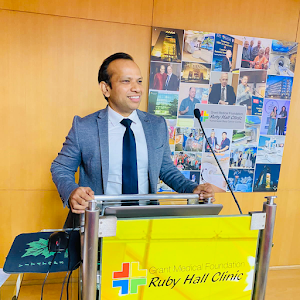
Dr. Vishal Bhasme is a neurosurgeon with experience in advanced brain surgery in Pune. He holds MBBS, MS, and MCh qualifications and has received fellowship training in minimally invasive brain surgery and endoscopic skull base surgery at Weill Cornell, New York.
Patients with newly diagnosed, recurrent, skull base, deep-seated, or complex brain tumors can consult Dr. Vishal Bhasme for a detailed review of their scans, symptoms, treatment options, possible risks, and expected recovery.
Frequently Asked Questions
Does every brain tumor need surgery?
No. Some tumors may be monitored with regular scans. Others may require surgery, radiation, medicines, or a combination of treatments.
Can a non-cancerous brain tumor be dangerous?
Yes. A benign tumor may still press on the brain, nerves, or blood vessels and affect important functions.
Can a complex brain tumor be removed completely?
It depends on the tumor’s location and connection with nearby brain tissue. Sometimes leaving a small portion may be safer than attempting complete removal.
What is an awake craniotomy?
It is a carefully planned procedure in which the patient remains awake during part of the surgery so the team can monitor speech, movement, or other functions.
How long does recovery take?
Recovery differs for each patient. It depends on the tumor’s location, type of surgery, general health, and whether neurological problems were present before treatment.
Consult Dr. Vishal Bhasme for Brain Tumor Surgery in Pune
Choosing a neurosurgeon for complex brain tumor surgery should be based on relevant experience, specialised training, honest communication, careful planning, and access to a complete treatment team.
Book an appointment with Dr. Vishal Bhasme for a detailed evaluation and personalised guidance regarding brain tumor surgery in Pune.