Hearing the word “brain tumour” can be frightening for any patient and family. It often brings several questions to mind. Is the tumour cancerous? Will surgery be needed? Can it be removed safely? What will happen after treatment?
A glioma is one type of brain tumour. However, not every glioma behaves in the same way. Some grow slowly and can be managed for many years, while others grow faster and need early treatment.
With timely diagnosis, proper surgical planning and coordinated care from a neurosurgeon, radiation specialist and cancer specialist, many patients can receive effective treatment while protecting important brain functions.
What Is a Glioma?
The brain contains nerve cells as well as supporting cells called glial cells. These supporting cells help protect and maintain the nerve cells.
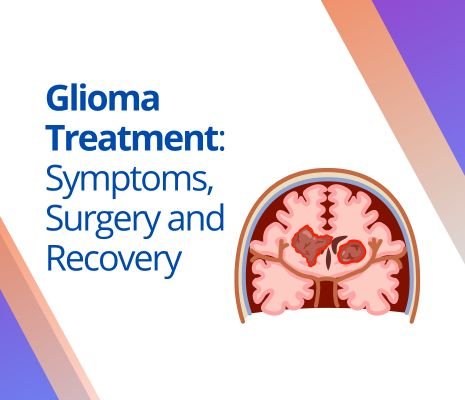
A glioma develops when some of these glial cells begin growing abnormally and form a tumour.
Glioma is not the name of one single disease. It is a broad group of brain tumours that includes conditions such as:
- Astrocytoma
- Oligodendroglioma
- Ependymoma
- Glioblastoma
The treatment depends on the exact type of glioma, where it is located, how quickly it is growing and whether it is affecting important areas of the brain.
Is Every Glioma Cancerous?
Not every glioma is equally dangerous.
Doctors usually describe gliomas as low-grade or high-grade.
Low-grade glioma
A low-grade glioma usually grows slowly. It may be present for months or even years before causing noticeable symptoms.
Some low-grade gliomas can still grow over time or change into a more aggressive tumour. Regular follow-up is therefore important, even when the tumour appears slow-growing.
High-grade glioma
A high-grade glioma grows more quickly and can spread into nearby brain tissue.
Glioblastoma is an aggressive form of glioma. Its treatment commonly includes surgery followed by radiation therapy and chemotherapy.
The grade cannot always be confirmed from an MRI alone. A tissue sample obtained during surgery or biopsy is usually examined in a laboratory to understand the exact tumour type.
What Are the Symptoms of Glioma?
Glioma symptoms depend mainly on the part of the brain where the tumour is growing.
A small tumour in an important area may cause symptoms early, while a larger tumour in another area may remain unnoticed for some time.
Common symptoms can include:
- Frequent or worsening headaches
- Vomiting, especially in the morning
- A first-time seizure
- Weakness in one arm or leg
- Numbness on one side of the body
- Difficulty speaking or understanding words
- Blurred or double vision
- Problems with balance or walking
- Memory problems
- Changes in behaviour or personality
- Unusual sleepiness or confusion
- Difficulty performing familiar daily tasks
Sudden weakness, speech difficulty, vision problems or a new seizure should not be ignored. Brain tumours located near areas that control movement, speech, vision or hearing may cause such symptoms.
These symptoms do not always mean that a person has a glioma. They can also occur because of migraine, stroke, infection, epilepsy or other conditions. A proper medical examination is required to find the cause.
How Is a Glioma Diagnosed?
The diagnosis usually begins with a neurological examination.
The doctor may check:
- Muscle strength
- Speech
- Vision
- Memory
- Balance
- Coordination
- Sensation
- Reflexes
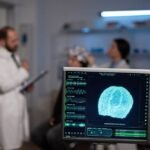
An MRI scan of the brain is commonly advised when a brain tumour is suspected. The scan helps the neurosurgeon understand the tumour’s size, location and relationship with important areas of the brain.
In some situations, additional scans may be needed for better surgical planning.
However, a scan cannot always confirm the exact type of tumour. A sample of tumour tissue may be needed.
This tissue can be obtained through:
- Surgery to remove the tumour
- A stereotactic biopsy, in which a small sample is taken using a carefully guided needle
The sample is then studied by a pathologist. Additional laboratory tests may also be performed to understand the tumour’s behaviour and help doctors plan further treatment.
How Is Glioma Treated?
There is no single treatment plan that suits every glioma patient.
The treatment may involve:
- Surgery
- Radiation therapy
- Chemotherapy
- Regular MRI monitoring
- Medicines to control symptoms
- Rehabilitation and physiotherapy
The plan is decided after considering the patient’s age, overall health, tumour type, grade, size, location and symptoms.
Is Awake Brain Surgery Required for Every Glioma?
No.
Awake brain surgery may be considered when the tumour is close to an area that controls speech, movement or another important function.
During selected parts of the operation, the patient may be asked to speak, move a hand or perform a simple task. This helps the surgical team identify and protect important brain areas.
The patient does not feel the surgery in the usual way because the scalp and surrounding tissues are properly numbed, and anaesthesia is carefully managed.
Awake surgery is only used in selected patients. The decision depends on the tumour’s location and the patient’s ability to cooperate during the procedure.
How to Choose a Hospital for Glioma Treatment in Pune
Glioma treatment often requires more than one specialist. Patients may need support from:
- A neurosurgeon
- A radiation oncologist
- A medical oncologist
- A neurologist
- A radiologist
- A pathologist
- A physiotherapist
- A speech therapist
When choosing a hospital, consider whether it has suitable brain imaging, operation theatre facilities, intensive care support, pathology services and cancer-treatment coordination.
Patients should also ask the neurosurgeon:
- Is surgery required immediately?
- Can the tumour be removed completely?
- Is the tumour close to an important brain area?
- Will a biopsy be enough?
- What problems can occur after surgery?
- Will radiation or chemotherapy be required?
- How long may recovery take?
- How often will MRI scans be needed?
Clear communication is important. The patient and family should understand the diagnosis, treatment choices, expected benefits and possible risks before making a decision.
Glioma Treatment with Dr. Vishal Bhasme in Pune
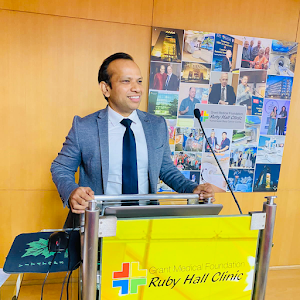
Dr. Vishal Bhasme is an MBBS, MS and MCh-qualified consultant brain and spine surgeon associated with Ruby Hall Clinic at Sassoon Road and Wanowrie.
He also provides neurosurgery and brain tumour consultations through Lopmudra Hospitals, including Lopmudra Meera Hospital at Camp–Swargate and Lopmudra Hospital in Pashan.
Patients can consult him for:
- Review of brain MRI scans
- Glioma evaluation
- Second opinion for brain tumour surgery
- Brain tumour biopsy
- Surgical removal of suitable brain tumours
- Planning for tumours near important brain areas
- Post-surgery follow-up
- Coordination for radiation and chemotherapy
The treatment plan is made only after examining the patient and studying the MRI and other reports.
Frequently Asked Questions
Is glioma the same as glioblastoma?
No. Glioma is a broad group of brain tumours. Glioblastoma is one aggressive type of glioma.
Can a glioma be completely cured?
Some low-grade gliomas can be fully removed and controlled for a long time. Other gliomas may grow into nearby brain tissue and need ongoing treatment and monitoring. The outcome depends on the type, grade, location and response to treatment.
Does every glioma require surgery?
Not always. Some small, slow-growing tumours may be monitored. A biopsy may be advised for deep tumours, while surgery may be recommended when the tumour can be safely removed or is causing serious symptoms.
Can a person live a normal life after glioma surgery?
Many patients return to regular activities after recovery. However, the result depends on the tumour’s location, grade and the patient’s condition before surgery. Some patients may need physiotherapy, speech therapy or continued cancer treatment.
How long does glioma surgery take?
The duration depends on the tumour’s size, location and complexity. A straightforward biopsy may take less time than removal of a tumour close to important brain areas.
Is glioma treatment available at Ruby Hall Clinic and Lopmudra Hospitals?
Patients can consult Dr. Vishal Bhasme for glioma and brain tumour evaluation at Ruby Hall Clinic and Lopmudra Hospitals in Pune. The hospital for surgery is selected according to the procedure, medical support required and the individual patient’s condition.
Medical disclaimer: This article is intended for general awareness and should not be used as a replacement for medical examination, diagnosis or personalised treatment advice.