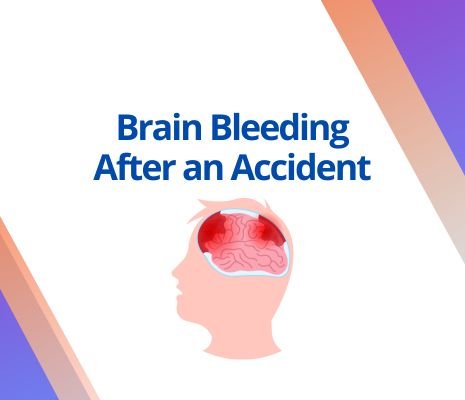
Most people think that if someone is awake and talking after an accident, they are probably fine. Unfortunately, that is not always true. Brain bleeding after an accident can occur even when the injured person appears normal initially. A person may suffer a brain bleed after a fall, road accident, sports injury, or any significant blow to the head. In some cases, symptoms appear immediately, while in others they may develop slowly over several hours or even days. This is why every head injury should be taken seriously and monitored carefully.
That’s why every head injury should be taken seriously.
What Is Brain Bleeding?
Brain bleeding happens when a blood vessel inside the head gets damaged and starts leaking blood. Since the skull is a closed space, the extra blood creates pressure on the brain.
This pressure can affect how the brain functions and may become life-threatening if not treated in time.
Can Brain Bleeding Happen Even After a Minor Accident?
Yes.
Sometimes people walk away from an accident feeling completely normal. A few hours later, they may develop a severe headache, become confused, or even lose consciousness.
This is why doctors often advise close observation after a head injury, especially in elderly individuals and people taking blood-thinning medications.
Warning Signs to Watch For
If someone has had a head injury, watch carefully for the following symptoms:
Persistent or Severe Headache
A headache that keeps getting worse after an accident should never be ignored.
Vomiting
Repeated vomiting after a head injury may be a sign that pressure is building inside the skull.
Excessive Sleepiness
If the person is unusually drowsy, difficult to wake up, or keeps falling asleep, seek medical attention immediately.
Confusion or Strange Behaviour
The person may seem disoriented, forgetful, or unable to answer simple questions correctly.
Weakness in the Arms or Legs
Difficulty moving one side of the body can indicate that the brain has been affected.
Slurred Speech
If speech becomes unclear or difficult to understand, emergency evaluation is needed.
Seizures
Any seizure after a head injury should be treated as a medical emergency.
Loss of Consciousness
Even a brief loss of consciousness after an accident requires immediate medical assessment.
How Do Doctors Diagnose Brain Bleeding?
The most common test is a CT scan of the brain.
A CT scan can quickly show whether there is bleeding inside the skull and help doctors decide the next steps.
Depending on the findings, additional tests may sometimes be required.
Does Every Brain Bleed Need Surgery?
No.
Some small bleeds can be treated with observation, medications, and regular monitoring.
However, larger bleeds may require urgent surgery to remove the collected blood and reduce pressure on the brain.
The decision depends on:
- The size of the bleed
- The patient’s symptoms
- The area of the brain affected
- The patient’s overall condition
What Happens During Surgery?
If surgery is needed, the neurosurgeon removes the accumulated blood and relieves pressure on the brain.
The main goal is to prevent permanent brain damage and give the patient the best chance of recovery.
Modern neurosurgical techniques have significantly improved the safety and success of these procedures.
Recovery After Brain Bleeding
Recovery varies from person to person.
Some patients recover completely and return to normal life. Others may need rehabilitation to improve movement, speech, memory, or balance.
The earlier treatment begins, the better the chances of a successful recovery.
When Should You Go to the Hospital Immediately?
Seek emergency medical care if a person develops any of these symptoms after a head injury:
- Severe headache
- Repeated vomiting
- Loss of consciousness
- Excessive sleepiness
- Weakness in the arms or legs
- Difficulty speaking
- Seizures
- Confusion or unusual behaviour
It is always better to get a head injury checked and find nothing serious than to miss the warning signs of a brain bleed.
Final Thoughts
A brain bleed after an accident is a serious condition, but timely treatment can save lives and prevent long-term complications.
If you or a loved one has suffered a head injury, don’t ignore symptoms that seem unusual or are getting worse. Early diagnosis and prompt treatment can make a significant difference in recovery and outcome.