Early and accurate diagnosis is critical in the management of brain tumors. Whether cancerous or benign, brain tumors can affect essential functions such as movement, memory, vision, balance, and speech. To detect these tumors with precision, neurosurgeons rely on a combination of imaging technologies and advanced diagnostic tools.
Here’s a clear explanation of how neurosurgeons evaluate, identify, and plan treatment for brain tumors using MRI, CT scans, and modern diagnostic techniques.
1. The First Step: Evaluating Symptoms & Medical History
Before ordering any tests, neurosurgeons carefully assess symptoms such as:
- Persistent headaches
- Seizures
- Weakness or numbness
- Vision or hearing problems
- Balance or coordination issues
- Changes in memory or personality
These symptoms help determine the region of the brain that may be affected and guide the choice of imaging tests.
2. MRI Scan: The Gold Standard for Brain Tumor Diagnosis
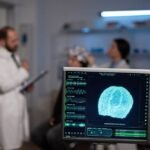
Magnetic Resonance Imaging (MRI) is the most accurate and detailed test for diagnosing brain tumors.
Neurosurgeons prefer MRI because it provides clearer images of soft tissues than any other technique.
Why MRI is important:
- Shows the exact size, shape, and location of the tumor
- Detects even very small or hidden tumors
- Differentiates between tumor tissue, swelling, infection, and bleeding
- Helps plan surgery with millimeter-level precision
Advanced MRI techniques include:
- Contrast MRI (with gadolinium): Highlights abnormal areas
- Functional MRI (fMRI): Maps areas responsible for speech, movement & memory
- Diffusion Tensor Imaging (DTI): Shows nerve fiber pathways to avoid injury during surgery
- MR Spectroscopy: Analyzes tumor metabolism to understand tumor type
MRI gives neurosurgeons the most comprehensive view, making it essential for diagnosis and surgical planning.
3. CT Scan: Fast & Effective for Emergency Situations
A Computed Tomography (CT) scan is often the first imaging test done in emergency cases.
It is quick, widely available, and excellent for detecting:
- Bleeding in the brain
- Skull fractures
- Calcification in tumors
- Large masses or swelling
CT scans are especially useful when a patient cannot undergo an MRI due to pacemakers, metallic implants, or severe claustrophobia.
4. PET Scan: Understanding Tumor Activity
A Positron Emission Tomography (PET) scan helps determine how active or aggressive a tumor is.
PET is useful for:
- Distinguishing between scar tissue and recurring tumor
- Assessing high-grade vs. low-grade tumors
- Detecting cancer spread (metastasis)
Neurosurgeons often combine PET with MRI for better accuracy.
5. Biopsy: The Final Step for Confirming Tumor Type
While imaging shows the location and behavior of a tumor, only a biopsy confirms the exact type.
Types of biopsies include:
- Stereotactic biopsy: A minimally invasive method where a needle is guided by MRI/CT
- Open biopsy: Performed during tumor removal surgery
Biopsy helps identify whether the tumor is:
- Benign
- Malignant
- Primary (starting in the brain)
- Secondary (spread from elsewhere)
It also guides advanced treatments like targeted therapy and immunotherapy.
6. Advanced Tools Used by Neurosurgeons
a. Neuronavigation Systems
A GPS-like technology that helps neurosurgeons reach the tumor safely with high precision.
b. Intraoperative MRI (iMRI)
Allows MRI images to be taken during surgery to ensure maximum tumor removal.
c. 3D Brain Mapping
Helps protect speech, movement, and memory areas while removing the tumor.
d. Awake Brain Mapping (in selected cases)
Used when tumors are close to critical brain areas. Patients remain awake and responsive so surgeons can preserve important functions.
Diagnosing a brain tumor involves much more than a single scan. Neurosurgeons use a combination of MRI, CT, PET, biopsies, and advanced mapping tools to make an accurate and safe treatment plan. Early diagnosis plays a crucial role in improving recovery, treatment success, and long-term outcomes.
If you or a loved one is experiencing persistent neurological symptoms, timely evaluation by a neurosurgeon in Pune can make all the difference.